
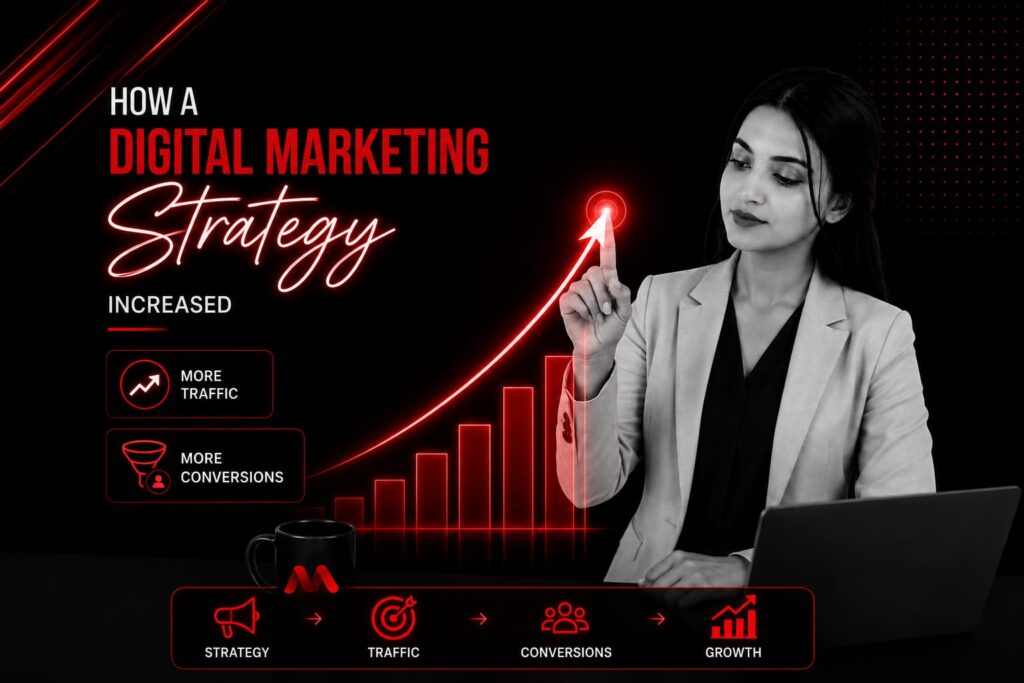
Every business wants more website visitors, but traffic alone isn’t enough. The real goal is attracting the right audience and turning those visitors into paying customers.
Many businesses invest in a website expecting it to generate leads and sales automatically. However, without a clear digital marketing strategy for small business, even the most visually appealing website can struggle to deliver results. This is where a well-planned digital marketing approach makes all the difference.
A strong digital marketing strategy for small business helps improve online visibility, attract qualified traffic, build trust with potential customers, and ultimately increase conversions. By combining tactics such as Search Engine Optimization (SEO), content marketing, social media marketing, paid advertising, and conversion rate optimization (CRO), businesses can create a powerful online presence that drives measurable growth.
Whether you’re a startup or an established company, implementing the right digital marketing strategy for small business can help you compete effectively, reach your target audience, and achieve sustainable growth in today’s competitive online marketplace.
In this blog, we’ll explore how an effective digital marketing strategy for small business can significantly increase website traffic and conversions, and why having a strategic plan is essential for long-term success.
Understanding the Difference Between Traffic and Conversions
Before discussing strategies, it’s important to understand the difference between traffic and conversions.
Website Traffic
Website traffic refers to the number of people visiting your website. More traffic means more opportunities to showcase your products or services.
Conversions
Conversions occur when visitors take a desired action on your website, such as:
- Filling out a contact form
- Making a purchase
- Requesting a quote
- Booking a consultation
- Downloading a resource
- Subscribing to a newsletter
While increasing traffic is important, attracting visitors who are genuinely interested in your offerings is what drives business growth.
A successful digital marketing strategy focuses on both increasing visibility and improving conversion rates.
Identifying the Challenges
Many businesses face common challenges that limit website performance:
- Low search engine rankings
- Poor website visibility
- High bounce rates
- Limited website traffic
- Low engagement levels
- Weak conversion rates
- Inconsistent lead generation
Without a clear strategy, marketing efforts often become scattered and ineffective.
The first step toward improvement is identifying these challenges and creating a plan to address them.
Building a Strong SEO Foundation
Search Engine Optimization (SEO) is often the starting point of any successful digital marketing strategy.
When potential customers search for products or services online, businesses that appear at the top of search results naturally attract more clicks and traffic.
Keyword Research
The process begins by understanding what potential customers are searching for.
Businesses can identify:
- Relevant search terms
- Customer questions
- Industry-specific keywords
- Local search opportunities
By targeting the right keywords, websites become more visible to people actively looking for solutions.
On-Page Optimization
Optimizing website content helps search engines understand what each page is about.
This includes:
- Optimized page titles
- Meta descriptions
- Header tags
- Internal linking
- Image optimization
- High-quality content
As search visibility improves, organic traffic begins to increase.
Technical SEO Improvements
Technical enhancements such as faster page speed, mobile responsiveness, and improved site structure help create a better user experience while supporting higher search rankings.
Creating Valuable Content That Attracts Visitors
Content marketing plays a crucial role in driving website traffic.
Today’s consumers research extensively before making a purchase decision. They look for answers, advice, and solutions online.
Businesses that consistently publish valuable content position themselves as trusted industry resources.
Blog Articles
Informative blog posts help answer common customer questions and attract organic traffic from search engines.
Topics may include:
- Industry trends
- How-to guides
- Expert insights
- Frequently asked questions
- Case studies
Every piece of content creates another opportunity for potential customers to discover your business.
Educational Resources
Creating downloadable resources such as guides, checklists, and eBooks can help capture leads while providing value to visitors.
The more useful your content is, the more likely people are to engage with your brand.
Leveraging Social Media to Expand Reach
A strong social media presence helps businesses connect with their audience and drive additional traffic to their website.
Social platforms provide opportunities to:
- Share content
- Build brand awareness
- Engage with followers
- Promote products and services
- Generate leads
Rather than simply posting promotional content, successful businesses focus on creating meaningful interactions.
Sharing educational, entertaining, and valuable content encourages users to visit the website and learn more.
Over time, social media becomes a valuable traffic source that complements other marketing efforts.
Using Paid Advertising in a digital marketing strategy for small business
While SEO and content marketing provide long-term benefits, paid advertising is an essential part of a digital marketing strategy for small business because it can generate immediate visibility and faster results.
Platforms such as Google Ads and social media advertising allow businesses to reach highly targeted audiences based on demographics, interests, behaviours, and search intent. This makes paid advertising an effective way to support a digital marketing strategy for small business and attract potential customers.
Benefits of Paid Advertising
- Instant traffic
- Precise audience targeting
- Measurable results
- Increased brand awareness
- Faster lead generation
When campaigns are optimised correctly, businesses can attract qualified visitors who are more likely to convert into customers. Combining paid advertising with SEO and content marketing creates a well-rounded digital marketing strategy for small business that delivers both short-term wins and long-term growth.
Paid advertising often works best when combined with organic marketing efforts to maximise return on investment and achieve sustainable business success.
Optimizing Landing Pages for Conversions
Getting people to visit your website is important, but it’s only the first step toward achieving meaningful results.
Visitors must be encouraged to take action once they arrive.
This is where conversion optimization becomes essential.
Clear Messaging
Visitors should immediately understand:
- What the business offers
- How it solves their problem
- Why they should choose that business
Simple, customer-focused messaging often performs better than complex sales language.
Strong Calls-to-Action
Effective calls-to-action guide visitors toward the next step.
Examples include:
- Get a Free Quote
- Schedule a Consultation
- Request a Demo
- Contact Our Team
Clear and visible CTAs can significantly improve conversion rates.
User-Friendly Design
A clean, easy-to-navigate website helps visitors find information quickly and reduces friction during the decision-making process.
Building Trust Through Social Proof
Trust plays a major role in conversion success.
People are more likely to do business with companies they believe are credible and reliable.
Successful digital marketing strategies incorporate trust-building elements such as:
Customer Testimonials
Real feedback from satisfied clients helps reassure potential customers.
Online Reviews
Positive reviews demonstrate customer satisfaction and build confidence.
Case Studies
Detailed examples of successful projects showcase expertise and results.
Industry Certifications
Certifications and awards reinforce credibility and professionalism.
When visitors see evidence that others have had positive experiences, they are more likely to take action.
Improving User Experience
User experience directly impacts both traffic and conversions.
If visitors encounter a slow, confusing, or outdated website, they may leave without exploring further.
Mobile Optimization
With the majority of internet users browsing on mobile devices, websites must deliver a seamless mobile experience.
Faster Loading Speeds
Visitors expect websites to load quickly. Faster websites often experience:
- Lower bounce rates
- Higher engagement
- Better search rankings
- Improved conversions
Easy Navigation
A well-organized website helps users find the information they need without frustration.
Small improvements in user experience can lead to significant gains in performance.
Tracking and Analyzing Results
One of the greatest advantages of digital marketing is the ability to measure performance.
Businesses can track:
- Website traffic
- User behavior
- Conversion rates
- Lead generation
- Campaign performance
Using tools such as Google Analytics and Search Console allows marketers to understand what’s working and identify areas for improvement.
Rather than relying on assumptions, decisions can be based on real data.
Continuous optimization helps maximize return on investment over time.
The Results Businesses Can Achieve with the Right Digital Marketing Strategy
When all these elements work together, the results can be transformative.
Businesses often experience:
Increased Website Traffic
Improved search visibility and content marketing attract more visitors.
Higher Quality Leads
Targeted marketing efforts bring in people who are genuinely interested in the products or services offered.
Better Engagement
Visitors spend more time exploring content and interacting with the website.
Improved Conversion Rates
Optimized landing pages and trust-building elements encourage action.
Sustainable Business Growth
A strong digital marketing strategy creates a consistent flow of traffic, leads, and opportunities.
Rather than relying on a single marketing channel, businesses benefit from a comprehensive approach that supports long-term success.
Why Consistency Matters
One of the biggest misconceptions about implementing a digital marketing strategy for small business is expecting immediate results.
While some tactics, such as paid advertising, can generate quick traffic, sustainable growth takes time. A successful digital marketing strategy for small business focuses on building long-term visibility, attracting the right audience, and improving conversions through consistent effort.
The most successful businesses consistently:
- Publish valuable content
- Monitor performance
- Improve their websites
- Engage with their audience
- Adapt to changing trends
A digital marketing strategy for small business requires continuous effort, regular improvements, and the flexibility to adapt as customer needs and market trends evolve. By consistently refining your SEO, content marketing, social media, and advertising strategies, you can achieve steady business growth.
Businesses that remain committed to their digital marketing strategy for small business often achieve the best long-term results, including increased website traffic, stronger brand awareness, higher search engine rankings, and better conversion rates.
Conclusion
Increasing website traffic and conversions doesn’t happen overnight. It takes careful planning, consistent effort, and a clear digital marketing strategy for small business to achieve lasting results. By focusing on the right audience, creating valuable content, improving online visibility, and continuously optimizing your marketing efforts, small businesses can build trust, attract qualified visitors, and turn them into loyal customers. A well-executed digital marketing strategy for small business is the key to sustainable growth and long-term online success.
A well-executed digital marketing strategy for small business helps attract the right audience, deliver valuable experiences, and guide visitors toward meaningful actions that increase leads and conversions.
From SEO and content marketing to social media, paid advertising, and conversion rate optimization (CRO), every component plays an important role in building a successful digital marketing strategy for small business and driving measurable business growth.
Businesses that consistently invest in a digital marketing strategy for small business are more likely to experience stronger brand awareness, higher-quality leads, increased conversions, and long-term success.
If your website isn’t generating the traffic or results you expected, now is the perfect time to evaluate your digital marketing strategy for small business and identify opportunities for improvement.
In today’s competitive online landscape, simply having a website isn’t enough. A well-defined digital marketing strategy for small business is what helps you stand out, attract qualified visitors, and turn them into loyal customers for long-term success.
FAQ
A digital marketing strategy is a structured plan that uses online channels such as SEO, content marketing, social media, email marketing, and paid advertising to achieve specific business goals.
Digital marketing improves online visibility through search engines, social media, content creation, and advertising, helping businesses attract more visitors to their website.
Conversions represent meaningful actions taken by visitors, such as purchases, inquiries, or sign-ups. They directly contribute to business growth and revenue.
The timeline depends on the strategy. Paid advertising can produce results quickly, while SEO and content marketing often require several months to generate significant growth.
The best channel depends on your business and target audience. However, combining SEO, content marketing, social media, email marketing, and paid advertising often delivers the best results.
Absolutely. Digital marketing allows small businesses to compete effectively by reaching targeted audiences, building brand awareness, and generating leads without requiring massive budgets.